Be reckless
The cost of doubt.
Sports used to have a different rhythm. The shot would go up; a gasp; a pause; an explosion. In one final decisive moment: Diggs. Sideline. Unbelievable. Bang. Santa Maria. I don’t believe what I just saw. In trials argued in milliseconds over disputes of millimeters, the executioner would drop their irreversible hammer; the jurist would fling out their arms to declare their certain verdict. The arc of two universes would, immediately and immutably, be cleaved in half. Did we just see what I think we just saw?
But now—did we? What did we see? The cadence of these moments is different. The drama is fragmented, disjointed, unwrapped in slow motion. A strikeout; a winning catch; a last-second heave—and the camera snaps to the dugout; to the sidelines; to two teams squinting up at the jumbotron, waiting to see what they think they just saw. They twirl their fingers; they throw the red flag; they cover their ears; they tap their helmets. The officials convene. “The previous play is under further review.” The officials convene to review if the catcher tapped his helmet to call for a review.

Was his toe on the line? Was his toe down? Was his toe off the plate? The broadcast shows us a replay; we see fans looking at replays; we see fans looking at their phones. We look at our phones. We welcome NFL rules analyst Mike Pereira into the broadcast booth. “Mike, what do you see here?” And then, eventually, in halting rulebook jargon, through a crackling lavalier microphone, we are told what we saw.
Of course, not every call is reviewed. Not every catch is disputed; not every home run is in doubt. But the possibility of a review is enough. After every big return—are there flags on the field? After every bang-bang play, including one to decide the World Series—“they might take a look just to take a look.” After every buzzer beater, including one to decide the NCAA basketball championship—“Jim, they’re gonna check it.”
That is the tradeoff in modern sports. The calls are correct, but the drama is clumsy, revealed to us in fitful piecemeal, like a poorly kept surprise party. And you can’t just watch sports anymore; you have to participate in officiating them too.
Live long enough on the internet—which is increasingly synonymous with just living—and you have to become your own Mike Pereira. I subscribe to a popular daily newsletter on technology news, and I noticed a consistent similarity—in topic and tone—between its emails and an AI-generated one sent by a SaaS product. Have I been reading the thoughts of the author, or the tightly-bulleted ramblings of lazily prompted bot?
Jeff Bezos’ rocket blew up yesterday. Here’s a picture—is it real and an embellishment?
Can peacocks fly? Does this video prove it or not?
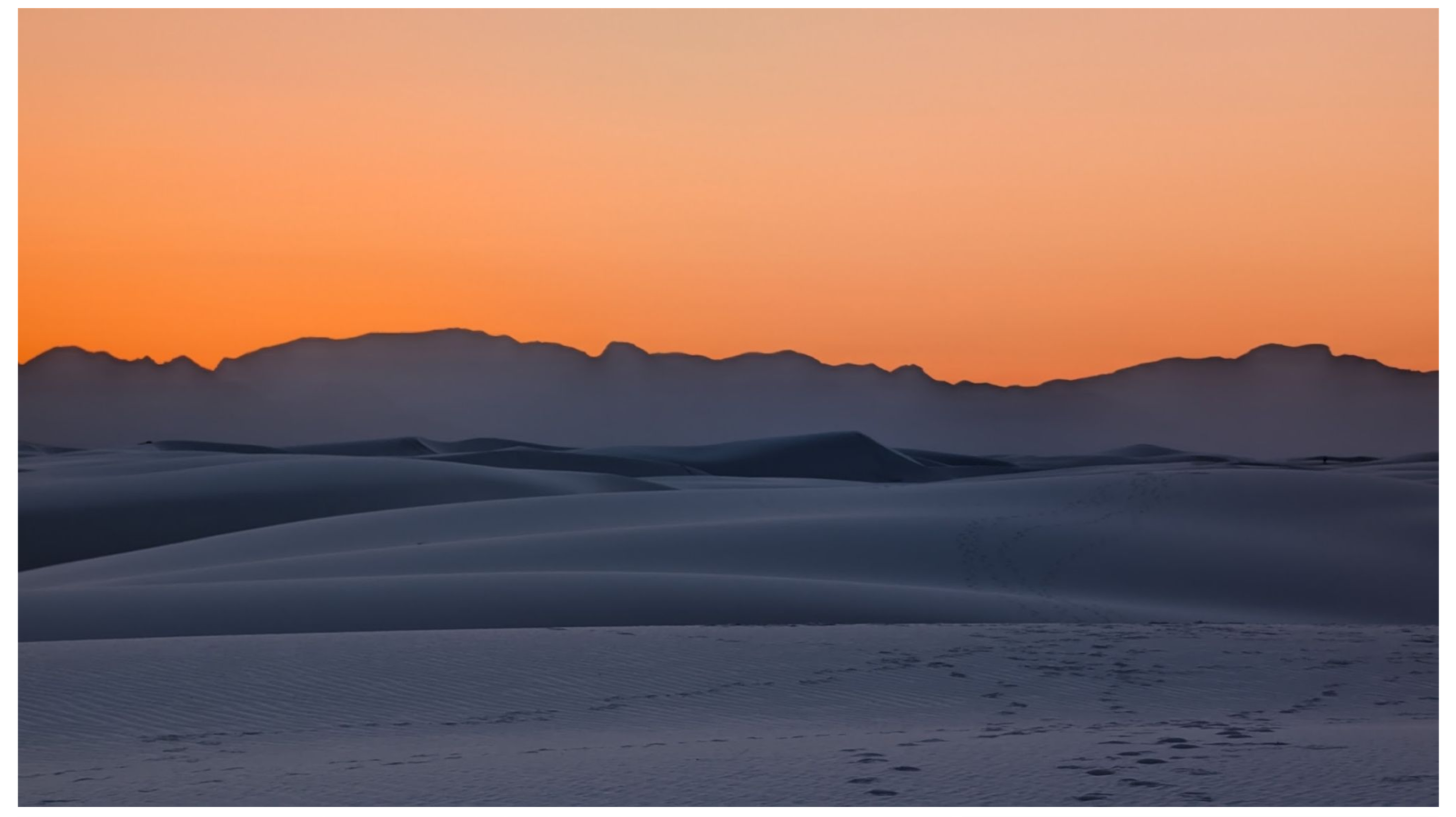
Can a tree grow in the white sands of the New Mexico desert? Does this picture tell you that it can?

Here is Magnifica Humanitas, a 42,000-word encyclical about artificial intelligence, written by Pope Leo XIV. Or was it written by AI?
Slop is everywhere now. To keep our humanity, we have to be watchful. AI is a valuable tool, but we must be vigilant.
But at what cost? It is not so easy to separate the internet from the rest of our lives. Once on, we cannot turn that vigilance off. Live in the metaverse long enough, and you disembody yourself; your animated hands become as real as your physical ones. Stream enough sports on TV, and you catch a similar feeling. Even when you go to a game live, in the momentary reflex to check your phone, you hesitate—what if what I’m watching is lagged, and the score alerts on my phone are ahead of the “stream” in front of me?
The internet has always dulled us. Our morning are spent blitzing through feeds of tragic headlines and awful pictures and thirst traps and rage bait and Wikipedia rabbit holes about the natural wonders of the world. Surely, that multimedia mutes us, in the rare moments that we encounter the same thing in the real world.
Is the same true for doubt? If our afternoons become skeptically parsing through emails and LinkedIn posts, wondering which are “real” and which are partial forgeries, will we ever let ourselves get lost in what we read? Will our first response always be to question if something is real—and only then, after Googling and counting fingers, a sober sense of reluctant awe? Will we become doubting Thomases who doubt too much, unable to believe anything unless we see it ourselves?
But even seeing may not be enough. Through hazard and happenstance, I spent this week in New Mexico, where the altitude lights the sky on fire.

You see it, clearly, blazing all around you, but you still feel that—that subtle disembodiment; that twinge; that instinctive hesitation. That is the cost of pervasive skepticism and the scientific method: you do not choose when it creeps into your consciousness. Challenges aren’t allowed on some plays and not others; they are a different set of rules, and a different way to play the game. Once trained on doubt, a mind doesn’t so easily give in to enchantment.
I do not know how to make sense of what’s happening now, or where it will all go. The lines between what is “real” and what isn’t will blur; we will argue over them; we will debate if what’s real is fake, if what’s fake is bad, or if it matters at all. Most people will wisely encourage us to be responsible about what we trust. Slow down; measure twice; confirm the call. You cannot run through a house of mirrors.
But amid the reflections and hallucinations, you still sometimes see exactly what you thought you saw. The real skies are as pink as they’ve always been; the sun still rises out of airplanes’ windows; there is still something in that orange light, just as there was before.

And for us to see that—to live that—we have to be willing to occasionally get the call wrong. We have to be reckless enough to let go, even when you do not know what is beneath you, and surrender to the air. To keep our humanity, we cannot be too vigilant. Sometimes, you could not write a script like this, because the world still writes its own scripts, too.
well, unfortunately it is way too late for me.
I always said "working in data long enough makes you paranoid about literally anything". Now the whole world share my sufferings now, due to the GenAIs.
There is yet another saying in Chinese: "生於憂患,死於安樂" ("Born/Live in worries, die in peace"). It means one could only see the ending of his/her journey *because of* constant worry and hence planning ahead to mitigate those risks. And there is also a similar concept in politics as well, when it comes to democracy & freedom:
> "Eternal vigilance is the price of liberty; power is ever stealing from the many to the few. ... Only by unintermitted agitation can a people be sufficiently awake to principle not to let liberty be smothered in material prosperity." - Wendell Phillips
So yeah, this is probably the inevitable cost to bear to live in the AI era.
I'm noticing the over-thinkers in my circles are reckoning with a vigilance that cannot match pace with a zeitgeist that changes faster than our whims. The millennial mid-life crisis narrative is bubbling up,
"Am I good at the wrong game? Have the measures blinded me from the life I want to live? Is my life only in metacognition or can I not embody this moment for what it is?"