Can AI make an iPhone?
The tyranny of taste.
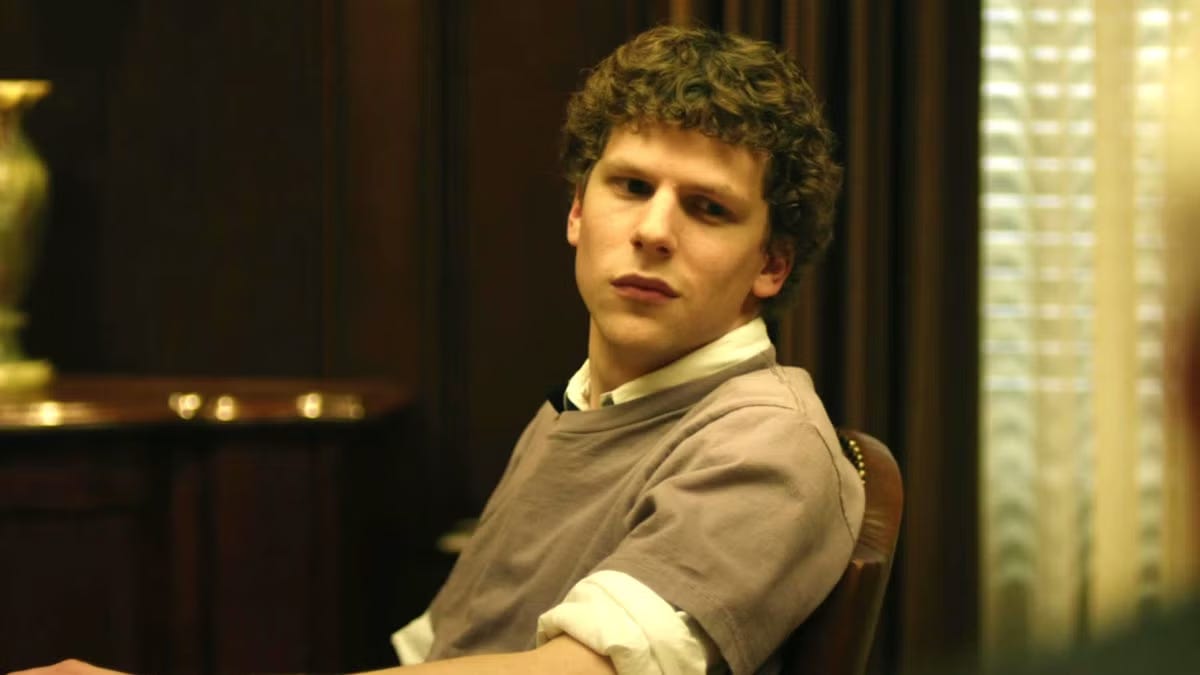
Suppose it is 2004, and you are sitting in a neon white conference room with Steve Jobs. He has a dream: An iPod, a phone, and an internet communicator, all in one device. There is an array of inspiration on a table in front of you: An iMac, a Powerbook, a Nokia 3310, a Gameboy, a Talkboy, a Sega Genesis, a Cuisinart stand mixer, a book of matches, a simple inclined plane, a Shelby Cobra sports car, a Phillips-head screwdriver, a tomahawk axe, a four iron, a tire. “These are all excellent devices,” says Steve Jobs. “One day, our device must be on this table too—it must be simple, beautiful, and powerful. You can design anything you want, and an army of the world’s best industrial engineers will hammer it into the world.”
What would you have made? Could you have invented the iPhone?
—
Suppose it is 2005, and you are sitting in a neon white conference room with Steve Jobs. He is an overheated balloon, stressed and hot and one sudden move from combusting. Jony Ive walks to the head of the table. “This device will not just be an iPod, a phone, and an internet communicator,” he says. “This device will be a revolution of craftsmanship. It will be mathematically precise and yet, as singular as the palm of your hand. It will be machined from flawless glass, stitched into a carbon alloy frame that is impossibly lightweight, and perfectly forgiving. When you hold it, you will not see a device, but form, function, Madame Butterfly, and a place where we know we are loved.”
“Ok but what is it?,” says Steve Jobs.
“I have no idea,” says Jony Ive. “But ten of us did a Crazy 8’s design sprint and we came up with 80 different concepts. There’s no way form, function, Madame Butterfly, and a place where we know we are loved isn’t in at least one of them.”
Jony Ive pulls out a poster of 80 different iPhones. Steve Job explodes. The rest of the room turns to you.
If the actual, original iPhone was among Jony Ive’s 80 ideas, along with the other 79 ideas people might’ve come up with in 2004, would you have picked the iPhone? Or would you have picked something else?1
—
Suppose it is 2006, and you are sitting in a neon white conference room with a reconstructed Steve Jobs. Machinists have been milling perfect glass and stitching it into a carbon alloy frame, but unfortunately, it is not impossibly lightweight and perfectly forgiving. It is heavy, or it is fragile. “We have to choose one,” the material engineer says, “or spend way more money to keep researching new ways to make it.”
A software engineer gives the next update. “It’s this one big button,” she says. “You cannot do so much with one button. We have many wonderful apps, but they are hard to use with just one button. If we added just two more buttons—a left arrow and a right arrow; still only three buttons; still 32 fewer keys than a Blackberry—we could multiply how much we can do. In your hand, you will see form, function, Madame Butterfly, a place where you know you are loved, and two very tasteful arrow keys. That’s still pretty good, right?”

What would you have said? Would you have said no, or talked about tradeoffs, impossible trinities, and business needs and compromise?
Initially, the first question seems easy: No, definitely not. If you could’ve invented the iPhone, you would’ve invented the iPhone. The second question seems harder; I genuinely don’t know how well I would do at choosing the iPhone that Steve Jobs actually chose.2
But I’m not sure the first answer is true, and I’m less sure the second question matters. Because it may be that the most important question—and the hardest one to get right—is the third one.
Could the iPhone have been the iPhone if Steve Jobs had chosen any of the other alternative designs? Who knows, but…probably? You can definitely imagine a world where the first iPhone looked like Exhibit No 1.42. More critically, creating something isn’t a singular act; it’s a repeated one. And most of us get lost, I suspect, in that repetition. We start with something simple and elegant, but either don’t have the restraint to keep it that way, or the willpower to keep hammering down every edge until we can stand it. We get tempted by tradeoffs, shortcuts, and shiny new possibilities. We get tired. We add more buttons, and more menus, and long and unnecessary preambles.
So, perhaps we could’ve identified the iPhone, and maybe we could’ve even imagined the iPhone. And the reason nobody else invented the iPhone is because nobody else had the disciple to insist that it stay an iPhone.
Anyway, it’s 2026, so the question is no longer if we could build an iPhone; it’s if AI could build an iPhone—and, more generally, if AI can make something great.
A viral new company called Taste Labs says yes:
AI has made it easy to generate anything. The challenge is knowing what to make. And how to make it great. … [ Our mission is to create ] models and agents can produce not just outputs that are correct, but that feel right.
We’re making the unverifiable verifiable, starting with design.
The idea behind Taste Labs is simple enough: Most AI models are “reinforced” by human judgements. ChatGPT sometimes gives you two answers to your question; you tell it which one you prefer; that vote nudges the model towards answers like your favored one. Taste Labs, by contrast, is selective about its judges, and uses a “curated community of tastemakers” to score its outputs. This, the theory goes, makes the model start to act more like an expert rather than some everyday philistine.3
On one hand, it’s an easy company for the internet to get mad about: Silicon Valley, once again attempting to quantize the soul; the tech elite, once again gentrifying the world with digital West Elm;4 AI, continuing its scorching march through the job market. On the other hand, it is a company built on a fairly unremarkable goal—make the AI models that billions of people already use better at making stuff people like.
You have to wonder, though: Does that work against the mission of making things more tasteful? Because good stuff—like the iPhone, but also good websites and good emails and good Powerpoint presentations—is as much about subtraction as addition. Good stuff comes from hard choices and painful limitation; from killing your darlings; from having more time to write a shorter letter. No matter how tasteful the mocks, the final product could still be a mess, unless the model also tells us no. And we don’t like those models.
Tellingly, there is a little game at the bottom of Taste Labs’ website. A handful of designs are presented in a grid; you can choose the ones you like and the ones you don’t. After making a few selections, the game tells you, no matter what you chose, that your taste rocks.
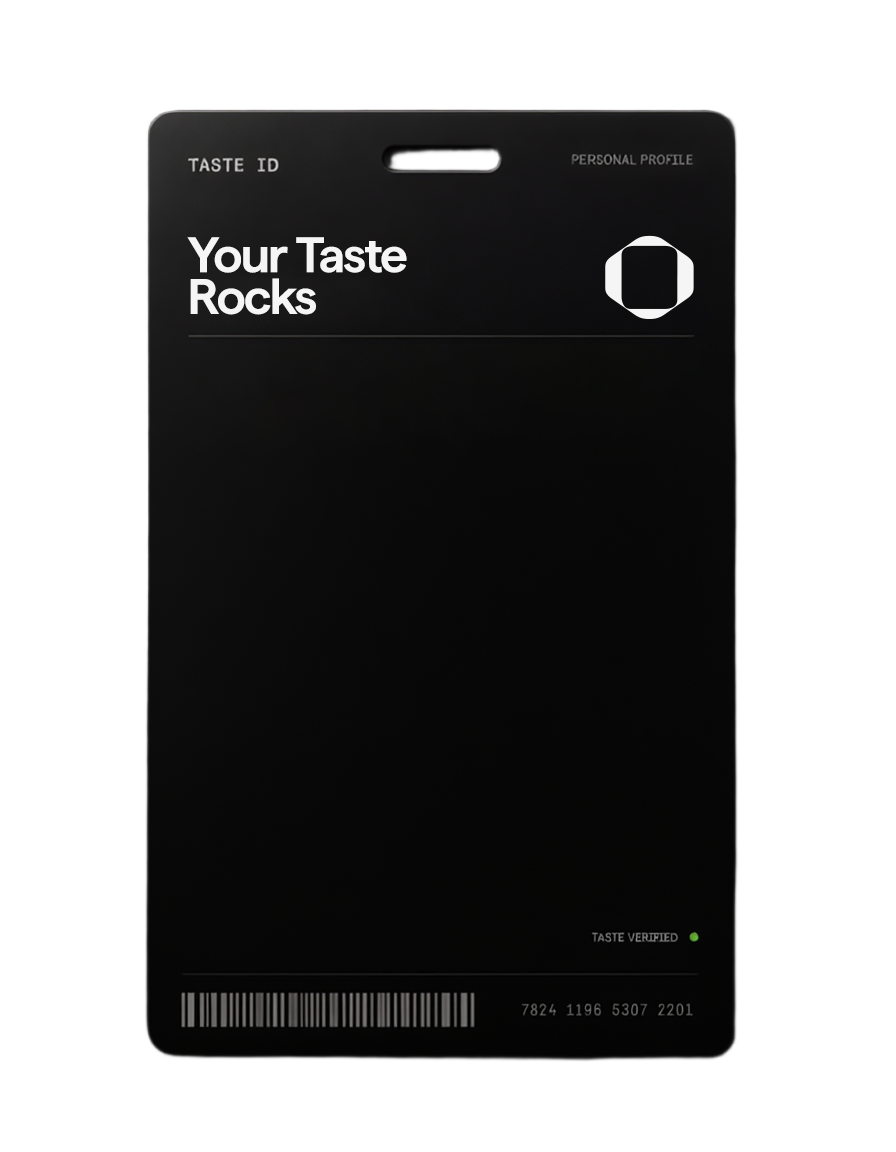
Taste Labs clearly doesn’t believe this; the entire premise of the company is built on the idea that only certain people have taste that rocks. But the company is a business, and people like to be told yes. It’s not a coincidence, after all, that Steve Jobs is known for two things: Making great stuff, and being an absolute tyrant.
In this case, there are pictures of the other designs that Apple considered, so, while we can’t erase the last 20 years from our heads, we can at least see the contemporaneous options. But it does raise an interesting question: If we didn’t have those designs, could AI create synthetic ones? It probably doesn’t work to say, “Hey ChatGPT, make some iPhone designs people might’ve made in 2005,” because ChatGPT’s weights are also polluted by 20 years of stuff about iPhones, and the model can’t “forget” that. But, people have tried to train LLMs with data from only the 1800s; if you built a model with data until 2004, could it reasonably approximate what people might’ve imagined an iPhone could look like in 2005? And maybe more interestingly, are there ways to generalize this, and use AI as a kind of counterfactual machine? Like, “I built a what-if world simulator and it lost me $85,000 on Kalshi” has to be a Reddit post somewhere.
Surely this also exists? There must be some sort of MIT quiz out there that shows different movie edits or song choruses, asks you to pick which one you like better, and then tells you how similar your opinions are to the actual edits that Steven Spielberg made or the songs that that Lana Del Ray (Lana Del Ray??) wrote.
You do wonder though—if this works, should the major labs not embed this sort of discrimination in their reinforcement learning methods? ChatGPT knows a lot about people; it can probably figure out if someone is a web designer and if someone is not. When the designers ask ChatGPT for design help, ask them for their opinions more often, and overweight their judgements. Though that methodology may be exactly what Taste Labs’ is incubating, and, like all startups, they may be selling less of a product to a customer, and more of a research technique—and, eventually, if it works, a company—to an AI lab.
regardless of how taste is designed or created or … is that any formula requires practice in some mechanical way. i can’t historically identify any one who eventually was told they had “unique” taste without the repetitions, iterations, and experience that building anything great requires.
so much of taste developes in the dark, way before any public applause can be heard.
I love the way you use the word "Tyranny" here. It captures the very nature of the work we do in tech/data/AI.
The more powerful tech it is, the more empowered the "center" is. No matter what this "center" is (corporation, governments, individuals, etc.). Right now, it is still humans sitting in the "center" wielding that power. And I don't really believe AI should be given that much of power, as I ain't sure if we as humanity could bear the worst possibility.