Gas town
The agents are everywhere.
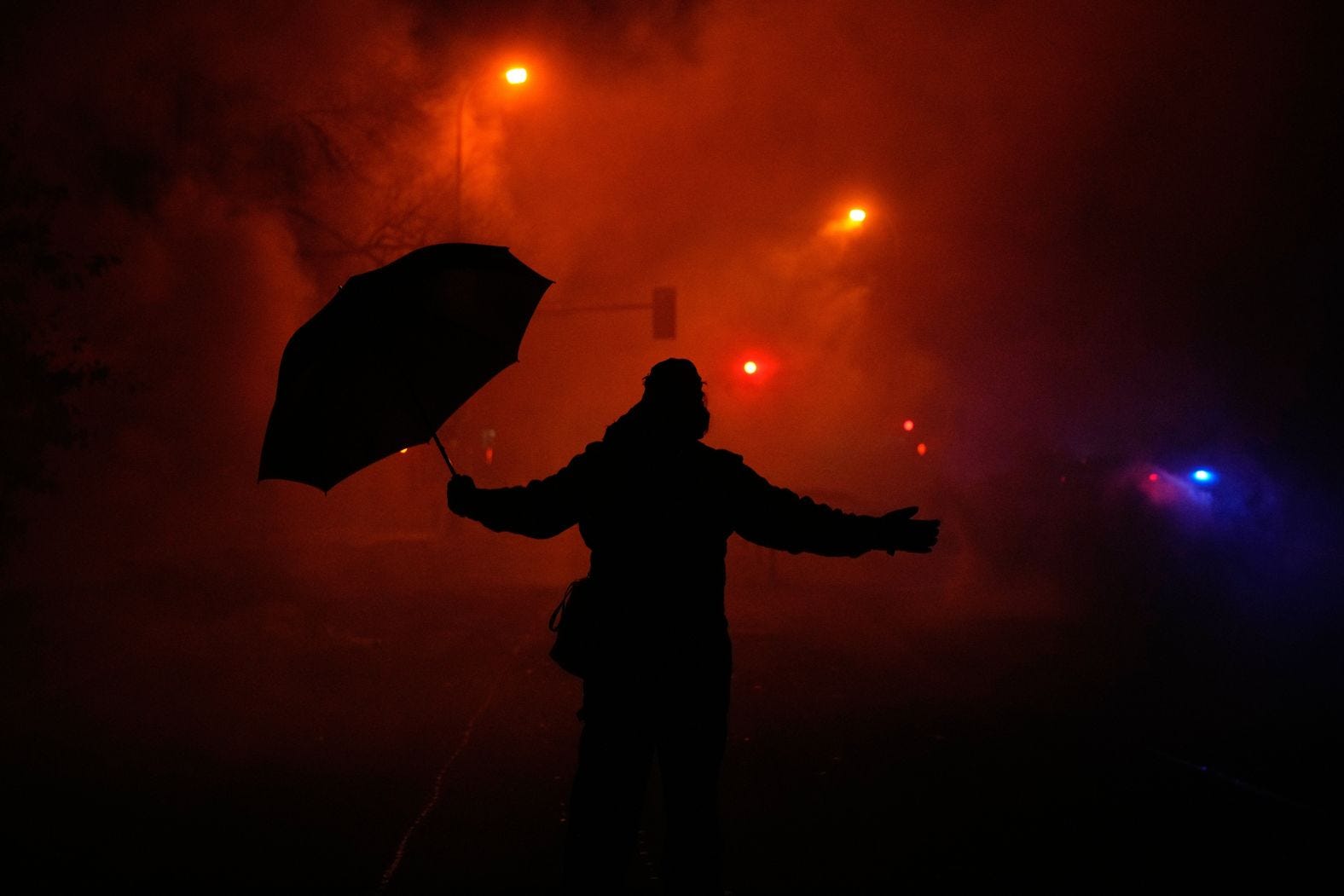
There is a popular new art project in Silicon Valley called Gas Town. Ostensibly, Gas Town is a development framework for writing code with AI. You tell Gas Town what you want to build, and it attempts to build it for you. But it does not do it in a remotely reasonable way; on the contrary, it is a framework that attempts to use AI in the most aggressive, expensive, and explosive ways possible. “Build me a website,” you might tell ChatGPT, and it will think for a moment, and produce a few polite lines of code.“Build me a website,” you might tell Gas Town, and will ignite a data center on fire. Creator Steve Yegge, on Gas Town:
Gas Town is an industrialized coding factory manned by superintelligent robot chimps, and when they feel like it, they can wreck your shit in an instant. They will wreck the other chimps, the workstations, the customers. They’ll rip your face off if you aren’t already an experienced chimp-wrangler.
Gas Town is AI agents talking to AI agents talking to AI agents. When you want to build something with Gas Town, you tell the “mayor,” which is, approximately, a persistent Claude Code session, which is itself, approximately, a bunch of messages being sent to Claude in a loop. The mayor spawns workers—that is, other Claude Code sessions—to write the code, and more workers to evaluate the code, and more workers to resolve conflicts between the code that other workers created. There are even more workers running around trying to fix bugs that other workers introduce, and workers overseeing those workers, and workers who make sure the workers are still working.1
There are agents everywhere; Gas Town is up to its elbows in agents; Gas Town is overrun with agents. Bots upon bots upon bots, looped into oblivion. Gas Town moves fast, Yegge says, but the progress is kinetic, a machine on fire, a barely controlled explosion. It moves fast because it moves, furiously and randomly and, eventually, forward:
Working effectively in Gas Town involves committing to vibe coding. Work becomes fluid, an uncountable substance that you sling around freely, like slopping shiny fish into wooden barrels at the docks. Most work gets done; some work gets lost. Fish fall out of the barrel. Some escape back to sea, or get stepped on. More fish will come. The focus is throughput: creation and correction at the speed of thought.
Work in Gas Town can be chaotic and sloppy, which is how it got its name. Some bugs get fixed 2 or 3 times, and someone has to pick the winner. Other fixes get lost. Designs go missing and need to be redone. It doesn’t matter, because you are churning forward relentlessly on huge, huge piles of work, which Gas Town is both generating and consuming. You might not be 100% efficient, but you are flying.
Gas Town’s workers produce tremendous amounts of waste—not because it is slop, but because everyone is experimenting. That is perhaps what progress requires: A million random mutations, and a mechanism for natural selection. Every organism on earth lives at the long tail of an evolutionary tree, walking on the graves of previous versions that did not make it. Every new feature that Gas Town produces is the same: The lone survivor; the last idea left on the island; Katniss Everdeen.
In Gas Town, waste is a mathematical necessity. When a hundred agents try something hundred different ways, 99 agents will fail. Even if Gas Town ships more software than our plodding manual methods do, no product can—or should—grow as fast as Gas Town goes. Imagine: Salesforce with a hundred times the features; GCP with a hundred times the buttons. We do not want that. Gas Town’s overseers do not want that. No matter how many agents Gas Town marches into its mines, only a few can the ore it needs.
That is life in Gas Town: An agent dies, another picks up its axe and hammers away. The orders come from above. Progress is collective. The agents are expendable. Theirs not to make reply; theirs not to reason why; theirs but to do and die.
When people talk about our AI-riddled future, there are often two versions. One is a smoldering crater; a planet nuked by the robots who conquered it, or by the humans who tried to stop them.2 The other is a utopia. Everyone is living lives of infinite leisure; of glorious abundance; we are colonizing the stars; everything is that Jetsons greenway aesthetic, somehow both efficient and serene.
Gas Town—its name, its imagery, the philosophy it represents—is something different. It is an experiment in what happens if we put AI everywhere, and in control of everything. And the result is not an apocalypse, exactly, but it is definitely not paradise. It is chaos—fuming, industrial chaos. It is a landscape paved over by tar and asphalt, turned into factories and highways, on which everyone is driving in every direction all at once.3
But Gas Town is just a proof of concept. It’s not how any actually writes code; it’s not how anyone is building software. It’s not even real: Its citizens are functions on a computer. They are whiffs of electricity in a server; they do not get tired; they do not get anxious; they do not care about their failures, their successes, or even their existence. It’s an intentionally absurd art project. Nobody actually lives in Gas Town. It’s just a simulation.
In San Francisco, everyone is addicted to vibe coding. Everyone has a backlog of ideas—of personal projects, of startups, of that perfect notetaking app—and they are manifesting them on their nights and weekends. They are starting companies. They are raising money. They are locking in, in monk mode, forsaking food and friendship, churning forward relentlessly on huge, huge piles of work. They are overrun with agents.
On the surface, everyone is excited. Silicon Valley feels alive; explosive; back. The mayor of Silicon Valley told us it’s time to build, and we obliged. We might not be 100 percent efficient, but we are flying. Because it’s fun. Because it’s urgent. Because “‘the opportunity cost is really high,’ the 24-year-old founder said.”
But in our quieter moments—fewer and farther between; the machines are waiting for our next instruction; they cannot be allowed to rest, and neither can we—is that feeling excitement? Or is it anxiety? Is it panic? Because we all know it—we are building on quicksand. The hottest new thing was built in two months, and became an obsession in six days. That cool internal tool you read about in a blog post on January 12? Someone already built it; launched it; DM the creator for early access.
You must feel it. The unease. The creeping uncertainty. You see a popular new product; should we be doing that instead? Your month-old idea already feels dated; are we building for the past? What do we do?
Or, is your idea is taking off? A dozen new versions are behind you, building faster, avoiding your mistakes. There’s a new top post on Hacker News; did someone just release an open source version of your app, with the strength of ten of your ideas, plus two? Boris tweeted; did Claude Code just replace you? Did OpenAI, with an internal tool? Cursor—remember that?—was king just three months ago; Oracle—remember this?—is being hunted for blood. Everyone is six months from being dead, the clock is ticking, and all you can do is run.
This is the chaotic energy of innovation, some say. This is just the beginning, the mayor says, and he may well be right. But it is a collective progress, of distributed bets. Most of our work will be waste—random mutations fed into the evolutionary maw; natural selection’s dead ends; the characters who die halfway through the movie. The world may use more software than ever—tsk tsk, have you not heard of the Jevons paradox?—but a million apps will not become a million booming businesses. There aren’t enough enterprise buyers; there aren’t enough users; there is not enough money. Most startups will incinerate themselves inside of an Anthropic data center.
No matter. Because what else can you do? You have to try, right? We are in the arena; we are in the Thunderdome; thousands enter, one leaves. Not ours to reason why; ours but to do and die. Pick up a dead man’s axe, and hammer away. Dents in the world are made from big swings; from bold ambitions. Not by doing a little thing every day, but by doing a huge thing, all at once.
Welcome to Gas Town.
Is that how dents are made? Mighty swings and audacious bets? Or is that just the story we tell ourselves? Are we even in the arena at all?
You’ve seen the pictures. For the last month, Minneapolis has been overrun by ICE agents. They are burning the city down, tearing families apart, a barely controlled explosion of terror and intimidation, and fuming, chemical chaos. Businesses are closed; communities are in hiding; a woman is dead, and a man:
I am a resident of the Whittier neighborhood of Minneapolis, Minnesota. I am over 18 years of age. I am a children’s entertainer who specializes in face painting. ... I’ve been involved in observing in my community because it is so important to document what ICE is doing to my neighbors. ... I drove to Nicollet Ave. and 26th where I could hear the whistles coming from. ... I noticed a man sort of acting to help traffic move more smoothly. He helped me find a place to park. I got out with my whistle and my camera. I went over to him and said something like, “I’m going to film and use my whistle.”
There was a phone in the man’s hand recording a video. An agent approached and asked us to back up, so I moved slowly back onto the sidewalk. The man stayed in the street, filming as the other observers I mentioned earlier were being forced backward by another ICE agent threatening them with pepper spray. The man went closer to support them as they got threatened, just with his camera out. I didn’t see him reach for or hold a gun. Then the ICE agent shoved one of the other observers to the ground. Then he started pepper spraying all three of them directly in the face and all over. The man with the phone put his hands above his head and the agent sprayed him again and pushed him. Then the man tried to help up the woman the ICE agent had shoved to the ground. The ICE agents just kept spraying. More agents came over and grabbed the man who was still trying to help the woman get up. ...
The agents pulled the man on the ground. I didn’t see him touch any of them—he wasn’t even turned toward them. It didn’t look like he was trying to resist, just trying to help the woman up. I didn’t see him with a gun. They threw him to the ground. Four or five agents had him on the ground and they just started shooting him. They shot him so many times. I don’t know why they shot him. He was only helping. I was five feet from him and they just shot him.
Alex Pretti was one of thousands of Minnesotans who took to their cars and their bikes—and to the streets, in the savage cold—to protect their neighbors. He was not directing traffic and recording a video on the corner of Nicollet Avenue and 26th because he wanted to win some lottery; he was not taking a mighty swing at a some audacious bet. He was not wondering, “What do I do?” He, like so many others, knew what to do: To help, one day at a time. One more meal delivered is one less meal that a family has to worry about finding. One more ICE agent tailed is potentially one less home torn apart. One more link the chain, holding the line for his community—and for all of us, so that we can play with our toys.
Will it be enough? Will the steel backbone of Minneapolis break the awful will of its invaders? I don’t know. Maybe they will go home. Or maybe they will gas other towns, with residents from the wrong places who voted for the wrong people, in hopes of finding a more comfortable and distracted citizenry.
If they do, what will we do? Will we get up from our computers? Will we let our agents sit idle? Will we drive our cars and blow our whistles? Will we watch out for our neighbors? Will you? Will I? Or will the opportunity cost be too high?
I have lived both lives, a bit. I spent a decade swinging, as big and hard as I could. And I spent a few short months on something else—safely, comfortably, out of the cold and behind a screen, in a trivial, insignificant corner, but on the field for a cause I cared about.
I have written posts about both. Only one is about regret.
These are the jobs in Gas Town, according to one commentator: manager agent, temporary worker agents, persistent worker agents, merge agents, fixer agents, maintenance manager agent, maintenance worker agents, maintenance manager checker agents.
I’m not exactly a doomer about this particular scenario, because it’s all science fiction, right? Right?
Gas Town is IT, industrialized:
The dominant conglomerates of the future won’t be the companies that build software with humanoid agents, but those that figure out how to run the computing machine at a massive scale. They will figure out how to put coding agents on a perpetual loop, in a factory that doesn’t have to sleep or take vacations. They will be the companies that industrialize the most, and optimize for ACPE—average compute per employee. They will be the ones that turn engineers into factory supervisors who watch the line, look for defects, and doze off to the dull hum of the machinery that replaced them.
What a beautiful read. Thank you for writing from the heart
it is such a confusing and crazy time right now... and in one week the Bay Area hosts a Super Bowl... feels so surreal.